Industrial Professions Illustrations Set Review
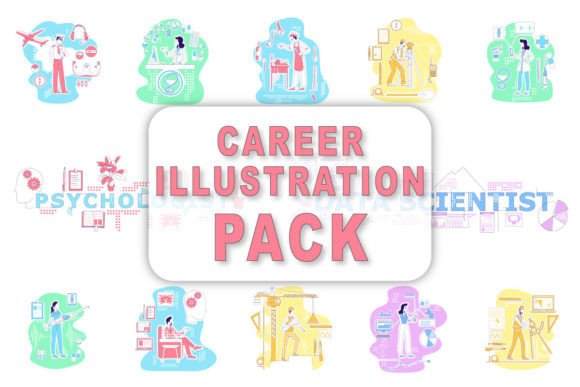
As an embroidery designer who constantly scouts for versatile graphics that translate well from screen to stitch, I approach every new digital asset with a healthy dose of skepticism. We have all downloaded beautiful vector art only to find it impossible to digitize cleanly or too detailed for a 4x4 hoop. When evaluating the Industrial Professions Illustrations Set, my primary focus was not just on the aesthetic appeal of these 2D cartoon characters, but on their structural integrity as a foundation for a machine embroidery design. This collection features 21 male and female workers intended for web design and occupational guidance, but I see immense potential for the maker community. The clean lines and distinct color blocking typical of this graphic style are exactly what we look for when creating readable, professional custom apparel and merchandise.
Translating Web Graphics to Stitched Reality
The first impression of this bundle is one of clarity. For an Etsy seller or small business owner, these illustrations offer immediate recognition. The characters represent specific trades without relying on microscopic details that would turn into thread mush. In my assessment, the bold shapes suggest they will perform exceptionally well as either direct embroidery or, even better, as an applique design. Because these were originally created as web graphics, the silhouettes are optimized for visibility at smaller sizes. This is crucial when you are planning a tote bag design or left-chest logo placement where space is limited. The visual personality strikes a balance between friendly and professional, making them suitable for both children’s career-day gear and adult vocational training uniforms.
However, moving from pixels to stitches requires careful interpretation. A flat fill on a screen does not account for fabric texture or thread sheen. When reviewing these assets for a real embroidery project, I immediately consider how the stitch density will interact with the material. These illustrations likely contain large areas of solid color. If digitized as standard fill stitches without proper underlay or texture variation, they could become bulletproof patches that pucker lightweight fabrics. As a reviewer, I advise treating these graphics as templates rather than finished digital embroidery file solutions unless they have been specifically tested for stitch-out. The simplicity is a strength, but it demands smart digitizing choices to maintain that crisp, cartoon charm in thread form.
Real-World Application: The Vocational Tote Bag Test
To truly judge the utility of the Industrial Professions Illustrations Set, I mentally prototyped a specific product: a canvas tote bag for a local trade school fundraiser. This scenario tests durability, visual impact, and production efficiency. For this handmade product, I selected the female electrician and male carpenter illustrations. The goal was to create a personalized gift that students would actually use, not just shelf.
In this application, the 2D cartoon style works brilliantly because canvas is a textured, unforgiving fabric. Fine details get lost in the weave, but the bold outlines and solid shapes of these characters pop against the natural cotton. I envisioned using a satin stitch border to define the character edges, providing a clean finish that prevents fraying on the raw applique fabric. For the internal details like tool belts or safety glasses, a simple running stitch or minimal fill keeps the design lightweight. This approach ensures the tote bag design remains flexible and doesn't feel like wearing armor. From a business perspective, this set allows for rapid customization. You can easily swap out the character to match different departments while keeping the branding consistent, which is vital for small shop product lines and commercial embroidery contracts.
Navigating Fabric Limitations and Hoop Constraints
While these illustrations are versatile, they are not immune to physical limitations. As you plan your embroidery project, you must consider where caution is necessary. These graphics feature distinct limbs and tools that extend outward. On curved surfaces like caps, those horizontal extensions can distort or pull. I would avoid placing wide character poses on structured hats; instead, opt for vertical orientations or isolated head-and-shoulders crops for sweatshirt embroidery near the neckline.
Fabric choice dictates success. On stretchy knits used for baby clothes or t-shirts, the solid nature of these cartoons requires excellent stabilization. Without adequate stabilizer, the weight of the thread can cause the garment to sag. For baby embroidery, I strongly recommend testing the design on scrap fabric first to ensure the back isn't too scratchy against sensitive skin. Additionally, be wary of dark fabrics. Since these are web-style illustrations, they may rely on light colors for definition. Stitching a yellow-helmeted worker onto a navy sweatshirt requires high contrast thread colors or a white underbase to prevent the design from disappearing. Always verify that the embroidery file includes appropriate color stops for the specific garment color you intend to use.
Professional Standards for Sellers and Makers
For creative entrepreneurs, the value of the Industrial Professions Illustrations Set extends beyond a single stitch-out. It lies in brand consistency and customer trust. When listing items online, your printable mockup needs to accurately represent the final result. Because these are clean vector-style graphics, they render beautifully in digital previews, helping buyers visualize the finished product before purchase. However, ethical selling requires transparency. Before listing any item derived from this bundle, you must confirm the licensing terms. Does the license cover commercial sale of physical embroidered goods? Can you sell the digitized files themselves? Clarifying this protects your craft business reputation.
Furthermore, professional presentation means quality control. Never assume a converted file is perfect. Inspect small details like facial features or fingers. In 2D art, a hand might look fine, but in thread, five fingers in a half-inch space is a recipe for disaster. Simplify where necessary. A mitten shape often reads better than individual fingers in holiday embroidery or workwear patches. Check your hoop size compatibility before purchasing; having 21 designs is useless if they don't fit your machine's maximum field. Finally, test on both light and dark backgrounds. A design that looks vibrant on white twill might need a complete thread palette overhaul for denim. By applying this level of scrutiny, you transform generic clipart into premium design assets that elevate your handmade offerings and satisfy client expectations for quality and durability.